Apex Daily · The Daily Edition

Apex
Daily.

Saturday, 18 July 20265 storiesCurated by Haus of Apex

Manhart's 910hp M5 Touring wagon just landed. Manthey's 992.2 GT3 RS kit shaved seconds off Nürburgring times with zero engine work. Koenigsegg's Jesko Absolut cracked two production-car speed records in June via software alone. Arosa ClassicCar fires up in September (76 corners, pure Alpine theatre). Mansory's take on the Jesko landed some surprisingly restrained carbon aero—yes, really.

Manhart's M5 Touring Just Gained 183 hp

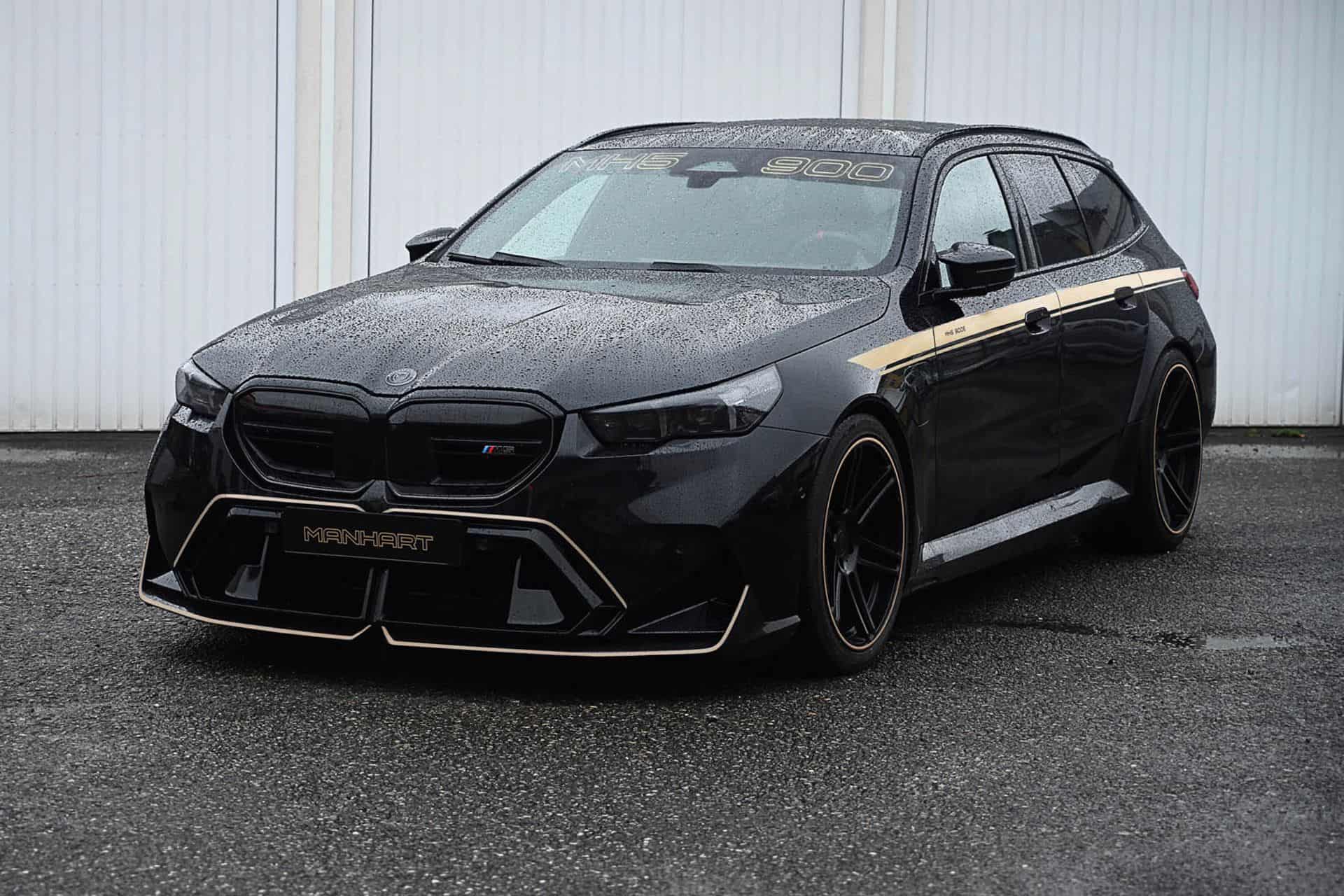
The MH5 900E extracts 910 hp from the M5 Touring's hybrid V8, up 183 hp over stock via turbo upgrade and powerbox. A family hauler that hits hypercar thrust numbers.

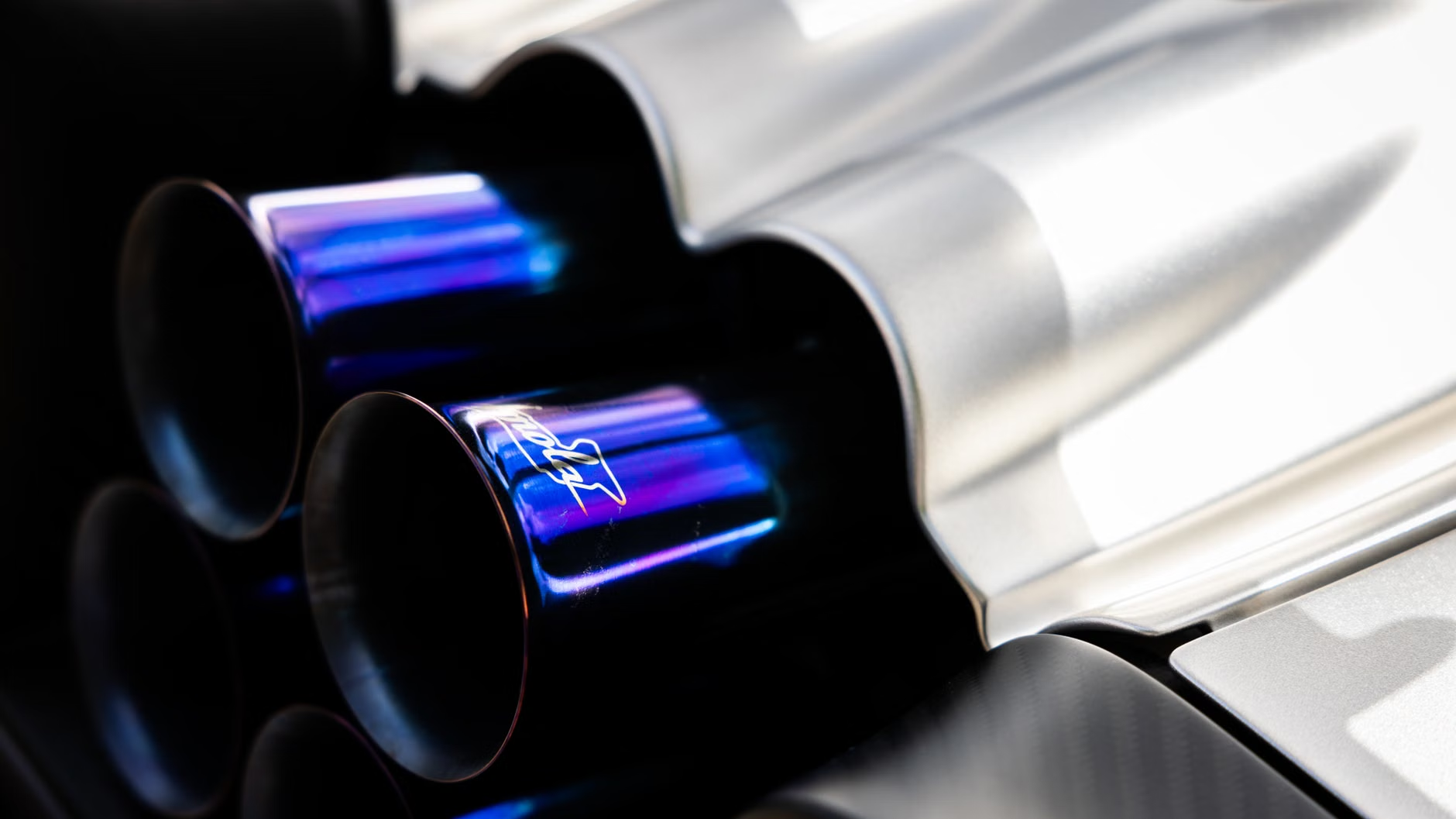
A turbo upgrade on the S68 V8, combined with MANHART's MHtronik powerbox, pushes the hybrid system to 910 hp and 1,200 Nm—up 183 hp and 200 Nm from stock. Suspension upgraded via H&R lowering springs or KW Variant 4 coilovers; exhaust is MANHART stainless with quad 115 mm tips. BimmerPost quietly divided between 'finally realistic' and 'why a wagon?' — the tuner crowd respects the restraint.

The Manhart MH5 900E Touring represents the latest iteration of the German tuner's obsession with extracting hidden performance from BMW's plug-in hybrid flagships. The standard M5 Touring already ships with 727 hp and 1,000 Nm of torque from its S68 twin-turbo V8 paired with an electric motor. Manhart's intervention doesn't touch the electric component—all gains come from the petrol engine via proprietary turbo optimization and the brand's MHtronik powerbox platform, a technique refined over three decades of precision tuning. Suspension geometry is carefully managed through either H&R's lowering springs (fixed) or KW's Variant 4 coilover setup (adjustable), both designed to control the significant mass and deliver sharper turn-in without sacrificing everyday civility. The visual treatment remains deliberately understated: signature gold accents, Concave One forged wheels in 21- or 22-inch sizes, and minimal aero intervention. Pricing has not been disclosed, though Manhart's historical pattern suggests €60k–€90k in labour and hardware. Brakes remain stock Brembo ceramic unless buyers request upgrading. The wagon segment has traditionally been beneath the tuner mainstream—until now. Manhart's M5 Touring proves that a practical family hauler can rival supercars in thrust while retaining four seats and a boot.
Read the original at BMW Blog →

Manhart's M5 Touring Just Gained 183 hp
Source · BMW Blog

Jesko Absolut Just Broke Two Speed Records

Jesko Absolut Just Broke Two Speed Records
Source · duPont REGISTRY

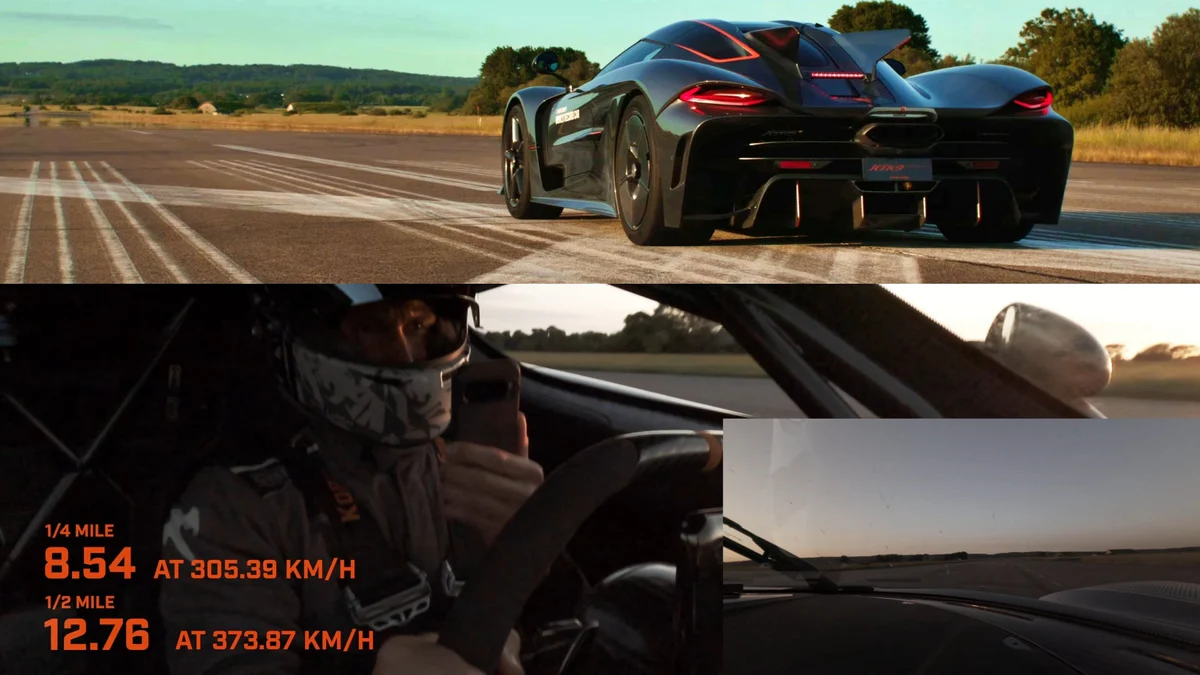
Koenigsegg's factory test driver piloted the Jesko Absolut to production car top speed records on June 6, 2026, recording 8.54 seconds at 190 mph over the quarter-mile and 12.76 seconds at 232 mph over the half-mile. Software update alone. No hardware change.

New software advancements made the records possible, and Koenigsegg is rolling them out via over-the-air update to all Jesko Absolut owners—every car receives the capability without a factory visit. Both represent the fastest top speeds ever recorded for a production car at those distances, marking the first time a production car exceeded 300 km/h or 186 mph over the quarter-mile. Hypebeast forums erupted; Rennlist called it 'vaporware until we see it live'—then the video dropped and went silent.

The Koenigsegg Jesko Absolut holds a unique position in the hypercar firmament: a 1,600 hp (E85) / 1,280 hp (petrol) twin-turbo V8 hypercar designed for absolute top-speed supremacy rather than track-corner dynamics. Its drag coefficient of just 0.278 Cd was achieved through 3,000+ hours of CFD optimization and 5,000+ hours of design engineering. The car achieved these June 2026 records not through mechanical modification but through refined traction control and powertrain management algorithms, distributed to owners as a free over-the-air software patch. This approach is unprecedented in the production-hypercar world and signals Koenigsegg's confidence in the platform's reserve performance envelope. All 125 production units were sold by mid-2026, with secondary-market prices now exceeding $5 million. The factory test runs were conducted at Ängelholm airfield (Koenigsegg's Swedish HQ, a former military facility) on unprepped tarmac with production tyres and rear-wheel-drive only, eliminating the usual asterisks attached to record claims. The Jesko Absolut was introduced at Geneva 2020 with a theoretical 330 mph top-speed claim—the highest figure ever published for a series-production automobile.

Read the original at duPont REGISTRY →

TUNERSource · Motor1№ 03

Manthey's GT3 RS Kit Just Murdered the Ring

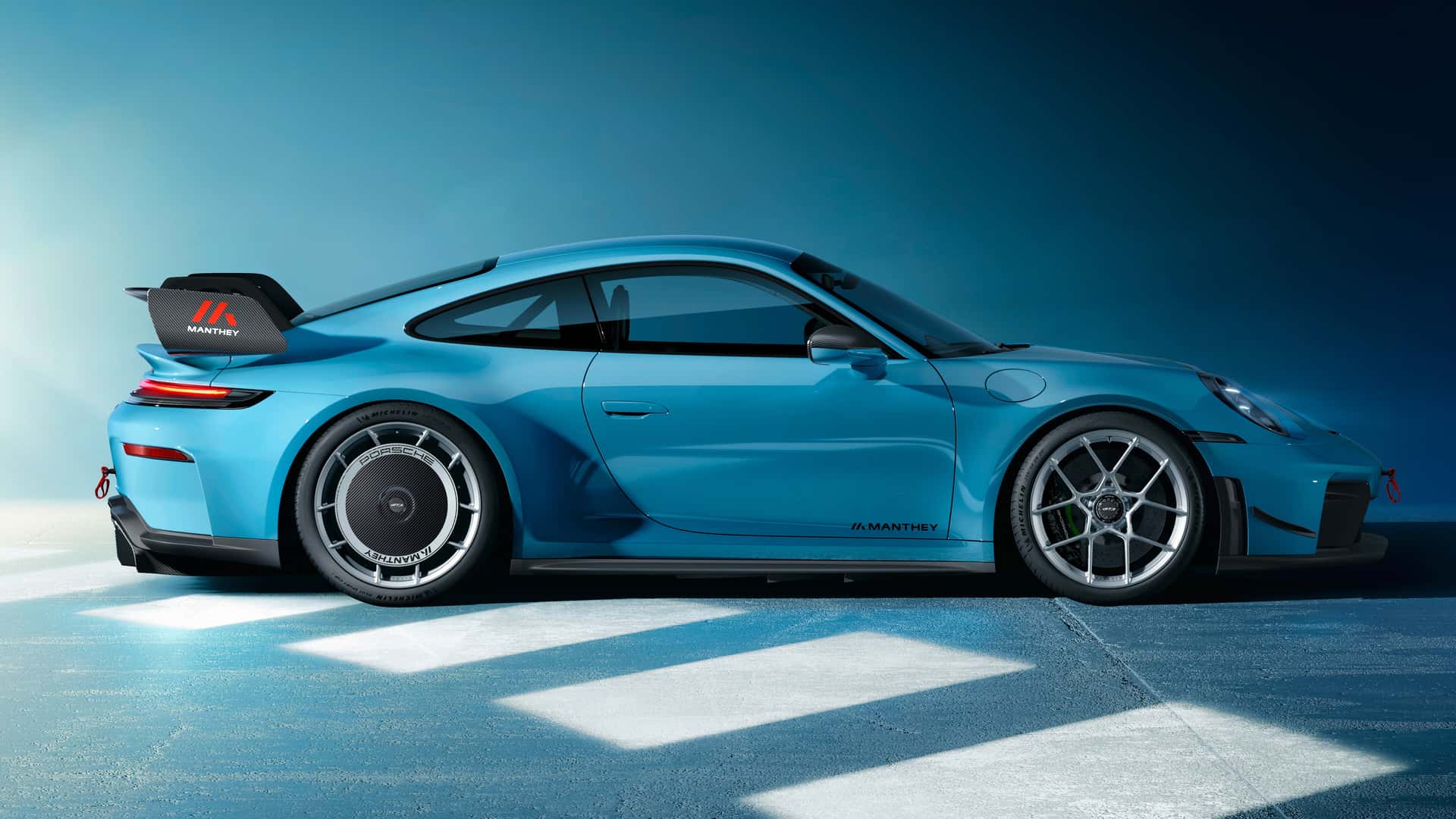
The Porsche 911 GT3 RS with Manthey Kit took on the Nürburgring, lapping the circuit in 6:45.389, nearly four seconds quicker than stock. Aerodynamic sorcery, zero engine work.

The car generates 20% more downforce without additional drag, with highlights including upgraded braking, semi-active coilover suspension, and a carbon fiber rear panel with vertical shark fin to improve cornering stability. Rennlist's elite split between 'peak GT3 RS' and 'Manthey finally went too far'—but the lap time shut most of them up.

Porsche and Manthey Racing (in which Porsche holds a 51% majority stake since 2013) have developed a comprehensive track-focused upgrade kit for the 992.1-generation 911 GT3 RS, available through Porsche's Tequipment catalogue. The package adds revised aerodynamic elements including a new front lip, extended Gurney flaps, reinforced rear wing, integrated canards, wider rear diffuser, and proprietary carbon-fiber aero discs mounted on the rear wheels to reduce aerodynamic drag. The underbody receives extended turning vanes and diffuser fins. The kit delivers 20% additional downforce without increasing drag coefficient, while the chassis benefits from Manthey's semi-active coilover suspension system with revised spring rates and upgraded carbon-ceramic braking. The Nürburgring test, conducted in April 2026, delivered a 6:45.389 lap—nearly four seconds faster than the unmodified GT3 RS baseline. Pricing for the GT3 RS kit is estimated at $116,160 USD (excluding tax and installation), while a similar package for the previous-generation 911 GT2 RS costs $113,140. The 992.2-generation GT3 kit (standard non-RS variant) prices around $57,300 USD, plus optional forged wheels ($15,500) and specialty Michelin Pilot Sport Cup 2 R tyres.

Read the original at Motor1 →

Manthey's GT3 RS Kit Just Murdered the Ring
Source · Motor1

Arosa ClassicCar Returns: 76 Corners Await

Arosa ClassicCar Returns: 76 Corners Await
Source · Arosa ClassicCar Official

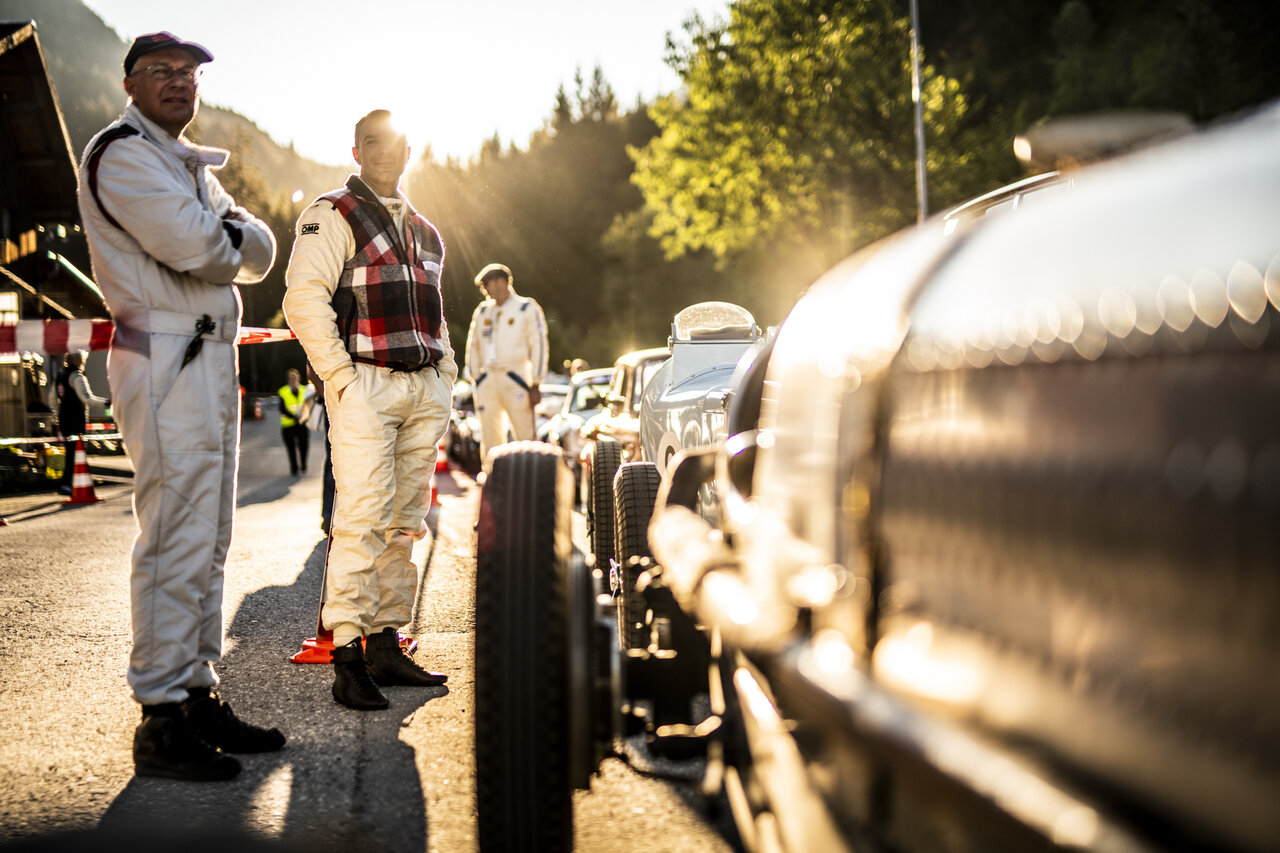
From 3 to 6 September 2026, the 22nd Arosa ClassicCar brings vintage and classic racing cars to the Schanfigg for one of Europe's great hillclimbs: 7.3 kilometres from Langwies to Arosa, 76 corners, 422 metres of climbing. Alpine theatre, fully booked within hours.

Expect to see dozens of meticulously maintained classic cars ranging from pre-war models to modern classics, with the distinctive sounds of vintage engines, gleaming chrome and leather interiors, and owners navigating the alpine roads. Motor-talk.de crowd planning road trips now; Swiss enthusiasts calling it the season finale for Pass tourism.

Arosa ClassicCar is a 22-year-old hillclimb institution held annually in September in the Graubünden Alps of eastern Switzerland. The 7.3-kilometre timed course rises 422 metres from the village of Langwies to the resort town of Arosa, featuring 76 sharp hairpins and elevation changes that demand precise throttle modulation and mechanical sympathy. A unique downhill stretch of 1.2 kilometres distinguishes Arosa from other Alpine hillclimbs and adds a spectacular final act to each run. The 2026 edition (Sept 3–6) operates as a multi-day festival combining competitive timed runs, scenic alpine drives through surrounding passes, village exhibitions, and paddock social events. Unlike modern circuit racing, the event attracts a connoisseur crowd: collectors valuing the preservation and driving of historic machinery over lap-time gambling. The Friday displays and Thursday-afternoon alpine parade drives serve as the primary spectacle. Participants and visitors experience unmodified vintage engines—original sounds, unfiltered, unelectrified—a point of pride for the organizers and attendees alike. The event draws international entries: pre-war racing cars, 1950s–1970s road racers, and a carefully curated selection of modern classics and bespoke builds. Accommodation and spectator logistics fill up 6–8 weeks in advance. The 2026 grid is already sealed.

Read the original at Arosa ClassicCar Official →

Mansory Just Showed Restraint. Yes, Really.

Mansory added a carbon-fiber aerodynamic package to the Koenigsegg Jesko, along with turquoise seats paired with all the usual grunt of the hypercar. 17 carbon pieces. Mostly tasteful. Mostly.

The components include roof scoop, hood cover, front flaps, rear flaps, front wings, modified diffuser, vertical add-ons, two new front boomerangs, racing light in the center, and rear eyebrows, with carbon-fiber bucket seats featuring turquoise-colored liner. Robb Report called it 'almost tasteful compared to Mansory's previous output'; the Jesko purist forums have gone quiet, which says everything.

Mansory, the Neu-Isenburg-based German tuning house known for maximalist design interventions on ultra-premium and exotic marques, revealed its interpretation of the Koenigsegg Jesko in January 2026. The package comprises 17 hand-laid carbon-fiber components engineered to enhance aerodynamic efficiency while adding visual drama. The aero discs reference Koenigsegg's own lightweight philosophy, while hood scoops, aggressive diffuser extensions, and integrated front boomerangs follow Mansory's signature formula of adding volume and complexity to existing designs. The interior treatment departs from Mansory's historical restraint: turquoise-colored carbon-fiber bucket seats, matching trim on the door cards, centre console, and steering wheel rim signal intent to customize beyond engineering. No mechanical modifications or power increases are included; the package retains the base Jesko's 1,600 hp (E85) twin-turbo V8 and 9-speed Light Speed Transmission. Pricing has not been disclosed, though Mansory typically charges €80k–€150k for comprehensive aero and interior packages on hypercars. The Jesko platform already represents an extreme engineering achievement (0.278 Cd drag, 125 units total production, €2.8M–€3.5M list price), making any aftermarket modification contentious. The Mansory interpretation is, by the tuner's historical standards, measured—a fact that has surprised and partially impressed the hypercar community.

Read the original at Robb Report →

Mansory Just Showed Restraint. Yes, Really.
Source · Robb Report
Colophon — This edition was compiled with AI support and editorially curated by Haus of Apex. Figures as announced by the manufacturers; original sources linked per story.